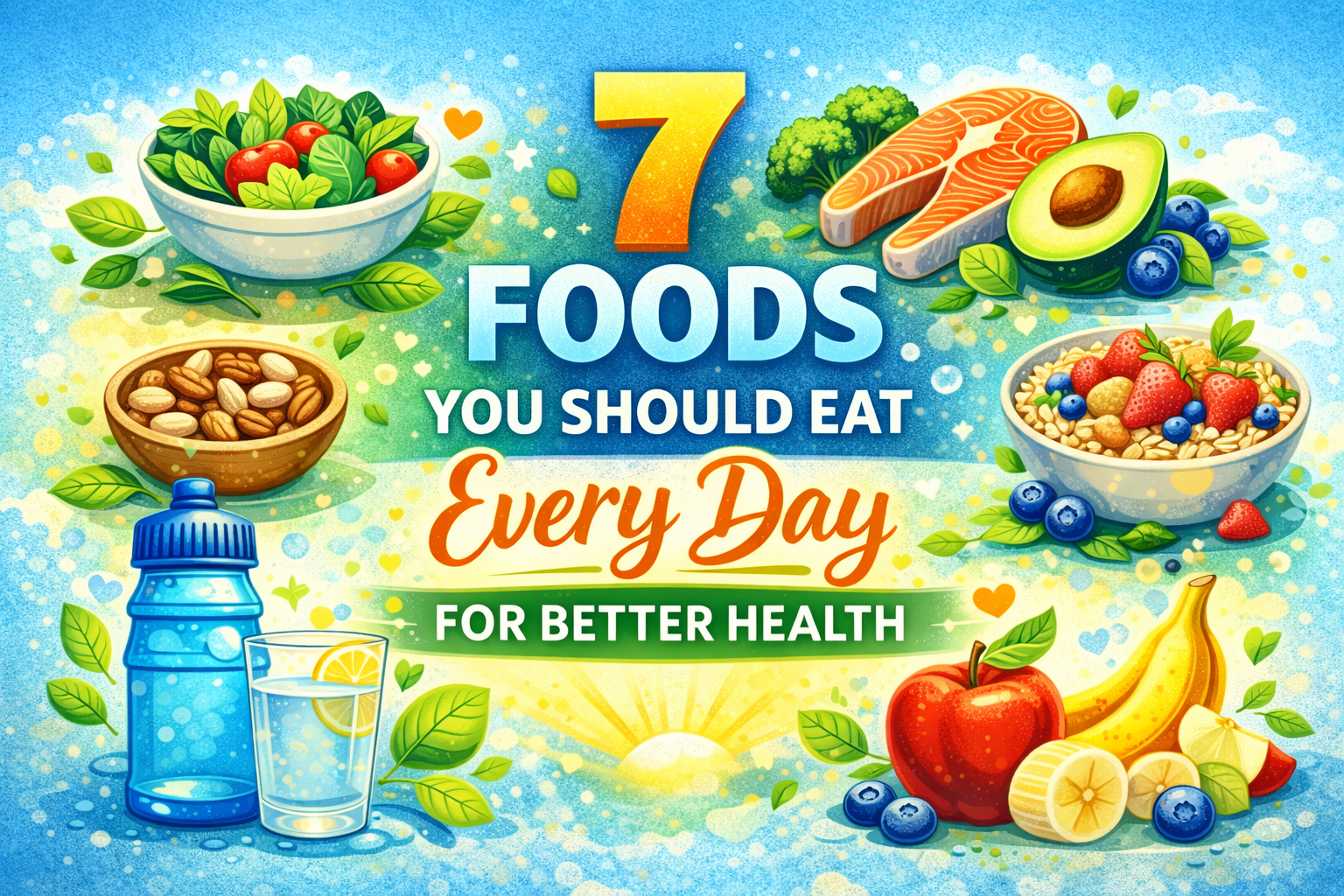
Eating a balanced and nutritious diet is one of the most effective ways to maintain good health. While occasional indulgences are fine, including nutrient-dense foods in your daily meals can boost energy, strengthen your immune system, and improve overall well-being. Certain foods provide essential vitamins, minerals, and antioxidants that help your body function optimally.
Here are seven foods you should consider eating every day for better health:
1. Leafy Green Vegetables
Leafy greens like spinach, kale, and Swiss chard are packed with vitamins, minerals, and fiber.
Health benefits:
- Rich in vitamin K, which supports bone health
- High in antioxidants that reduce inflammation
- Helps maintain healthy digestion due to fiber content
Adding a handful of greens to your breakfast, lunch, or dinner is an easy way to improve your daily nutrient intake.
2. Berries
Berries, including blueberries, strawberries, and raspberries, are delicious and full of antioxidants.
Health benefits:
- Protect cells from oxidative stress
- Support heart health by improving cholesterol levels
- Boost brain function and memory
You can eat berries as a snack, in smoothies, or as a topping for yogurt or oatmeal.
3. Nuts and Seeds
Almonds, walnuts, chia seeds, and flaxseeds are nutrient-dense foods that provide healthy fats, protein, and fiber.
Health benefits:
- Promote heart health by providing omega-3 fatty acids
- Help regulate blood sugar levels
- Keep you full, aiding in weight management
A small handful of nuts or a sprinkle of seeds daily is enough to reap the benefits.
4. Whole Grains
Whole grains like oats, quinoa, brown rice, and whole-wheat bread are excellent sources of complex carbohydrates and fiber.
Health benefits:
- Improve digestion and gut health
- Help maintain steady energy levels
- Reduce the risk of heart disease and type 2 diabetes
Replacing refined grains with whole grains is a simple way to enhance your daily nutrition.
5. Lean Proteins
Proteins are essential for muscle repair, hormone production, and overall health. Good sources include eggs, fish, poultry, tofu, and legumes.
Health benefits:
- Support muscle growth and repair
- Help maintain healthy skin, hair, and nails
- Keep you feeling full and satisfied
Incorporate a source of lean protein into every meal for sustained energy and health.
6. Yogurt or Fermented Foods
Probiotic-rich foods like yogurt, kefir, kimchi, and sauerkraut support gut health.
Health benefits:
- Improve digestion and nutrient absorption
- Strengthen the immune system
- Reduce inflammation in the gut
Choose unsweetened or lightly sweetened options to avoid excess sugar.
7. Colorful Vegetables
Vegetables like bell peppers, carrots, tomatoes, and broccoli provide a variety of vitamins, minerals, and antioxidants.
Health benefits:
- Support eye health and immunity
- Reduce inflammation and oxidative stress
- Aid in maintaining a healthy weight
Aim to fill half your plate with colorful vegetables at each meal for maximum health benefits.
Final Thoughts
Eating a variety of nutrient-rich foods every day is key to maintaining good health. By including leafy greens, berries, nuts and seeds, whole grains, lean proteins, fermented foods, and colorful vegetables in your daily diet, you can nourish your body, boost energy, and reduce the risk of chronic diseases.
Healthy eating doesn’t have to be complicated—small, consistent choices add up over time. Start by adding one or two of these foods to your daily meals, and gradually make them a regular part of your diet for long-lasting health benefits.
If you want, I can also create a 30-day “eat these 7 foods every day” meal plan so it’s easy to follow and stick with. Do you want me to do that?


